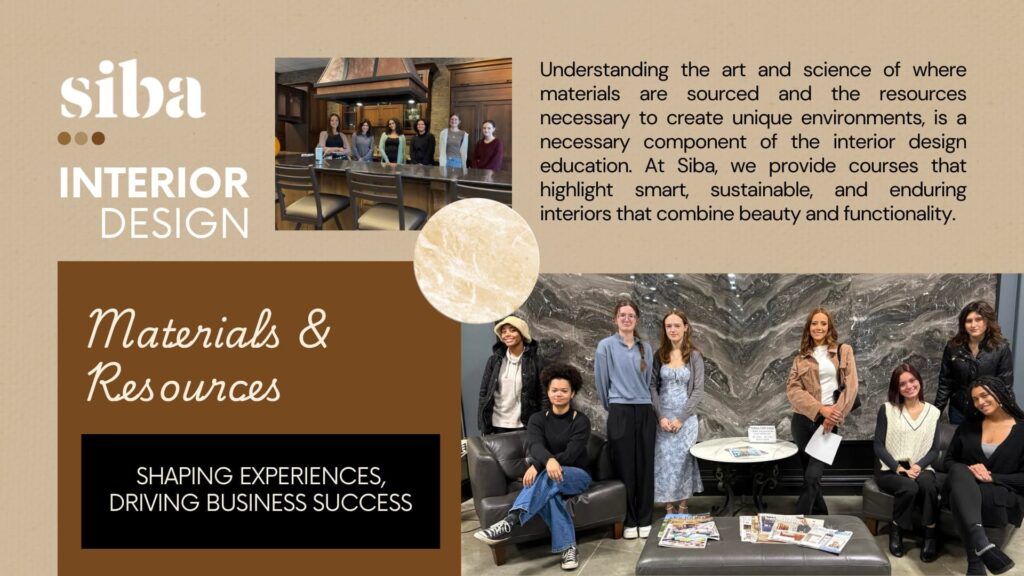
Interior design is more than just aesthetics—it’s about crafting spaces that are functional, sustainable, and emotionally resonant with various materials & resources. At the heart of this craft lies a deep understanding of materials and resources. For interior design students, mastering this subject is not optional—it’s foundational.
The Building Blocks of Design
Every surface, texture, and finish in a space is a result of material choice. From hardwood floors to acoustic ceiling panels, the materials you select influence:
- Functionality: Durability, maintenance, and performance
- Aesthetics: Texture, color, and visual harmony
- Experience: How a space feels, sounds, and even smells
Understanding the properties of materials—like tensile strength, porosity, or thermal conductivity—helps designers make informed decisions that align with both form and function.
Sustainability Starts with Smart Choices
In an era of climate consciousness, interior designers play a critical role in promoting sustainable practices. Studying materials and resources empowers students to:
- Choose eco-friendly options: Recycled, renewable, or low-VOC materials
- Understand life-cycle impacts: From sourcing to disposal
- Advocate for green certifications: Like LEED, WELL, or Cradle to Cradle
Designers who prioritize sustainability not only reduce environmental impact but also meet the growing demand for responsible design.
Budgeting and Value Engineering
A beautiful design means little if it’s not feasible. Knowledge of materials helps students:
- Balance cost and quality: Know when to splurge and when to save
- Communicate with vendors: Speak the language of suppliers and fabricators
- Avoid costly mistakes: Select materials that meet client needs and project constraints
Creativity Through Constraints
Far from limiting creativity, understanding materials expands it. When students know what’s possible with wood, glass, metal, textiles, and composites, they can:
- Innovate with confidence: Push boundaries while staying grounded in reality
- Solve design challenges: Use materials to address acoustics, lighting, or spatial flow
- Craft unique experiences: Blend textures and finishes to tell a story
Collaboration with Industry Professionals
Interior designers don’t work in isolation. They collaborate with architects, contractors, and manufacturers. A solid grasp of materials and resources enables students to:
- Read technical specifications
- Participate in construction conversations
- Ensure design intent is executed accurately
You may also be interested in real estate applications for this design specialty, especially about staging and renovations. That is covered in our new Real Estate Program.
In conclusion, studying Materials & Resources is not just about memorizing catalogs—it’s about mastering the language of design. For interior design students, it’s the key to creating spaces that are not only beautiful, but also smart, sustainable, and enduring. Siba’s Interior Design degree programs offers a Materials & Resources of Interior Design course that instructs students on this essential design component that combines beauty and functionality…check out our course offerings now!
Learn more about all of our programs in Fashion Development and Merchandising, Business Administration, Real Estate and Interior Design. Our team of experienced staff are ready and willing to help you refine your skills and build you up to reach your potential in your selected area of study. Reach out to our team today for more information! Your career and professional life begin at Siba!