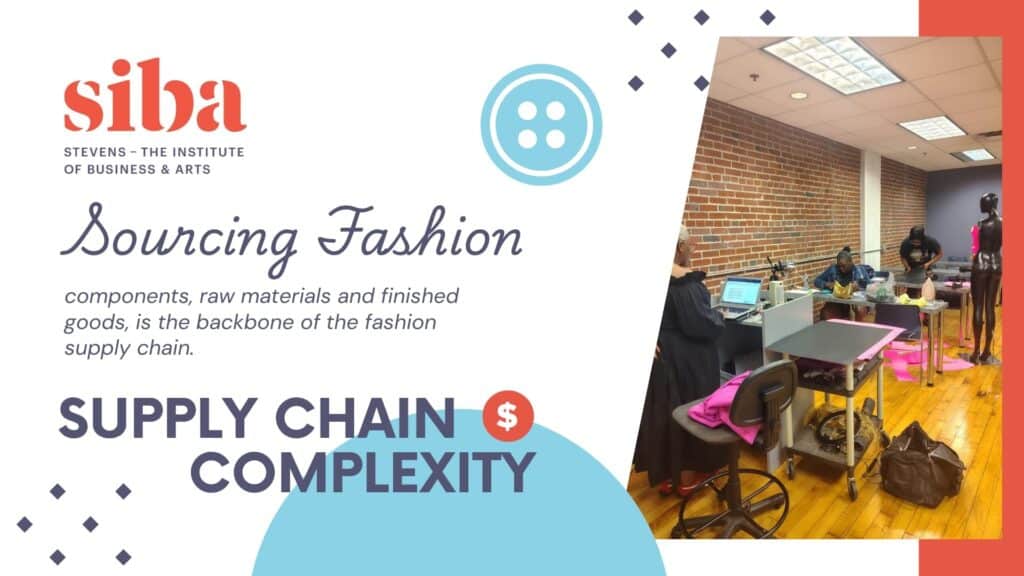
As a fashion development & merchandising student, you’re likely familiar with the excitement of creating new designs, forecasting trends, and bringing products to life. However, there’s a crucial aspect of the fashion industry that often takes a backseat in the minds of students: sourcing. Sourcing, or the process of finding and acquiring raw materials, components, and finished goods, is the backbone of the fashion supply chain. Without a deep understanding of sourcing, even the most talented designers and merchandisers can struggle to bring their visions to fruition. In this article, we’ll explore why studying sourcing is essential for fashion development & merchandising students, and how it can give you a competitive edge in the industry.
The Fashion Industry’s Supply Chain Conundrum
The fashion industry is one of the largest and most complex supply chains in the world, involving millions of workers, thousands of suppliers, and billions of dollars in revenue. However, this complexity also brings numerous challenges, including environmental degradation, labor exploitation, and quality control issues. As consumers become increasingly aware of these issues, fashion brands are under pressure to clean up their acts and adopt more sustainable and responsible practices. This is where sourcing comes in – by understanding the intricacies of the supply chain, fashion professionals can make informed decisions that benefit both their business and the environment.
Why Sourcing Matters for Fashion Development & Merchandising Students
So, why should fashion development & merchandising students care about sourcing? Here are just a few reasons:
- Cost control: Sourcing is a critical component of cost control in fashion. By understanding the costs associated with raw materials, production, and logistics, students can make informed decisions about pricing, profit margins, and product development.
- Quality control: Sourcing is also essential for ensuring quality control in fashion products. By understanding the materials, production processes, and quality standards of suppliers, students can ensure that their products meet the required standards.
- Sustainability: As mentioned earlier, the fashion industry has a significant environmental and social impact. By studying sourcing, students can learn about sustainable materials, production methods, and supply chain practices that can help reduce this impact.
- Competitive advantage: In today’s fast-paced fashion industry, having a deep understanding of sourcing can give students a competitive edge in the job market. By knowing how to navigate complex supply chains, negotiate with suppliers, and manage inventory, students can stand out from their peers and attract the attention of potential employers.
Real-World Applications of Sourcing in Fashion
So, how does sourcing play out in real-world fashion scenarios? Here are a few examples:
- Material sourcing: A fashion brand wants to create a new collection using sustainable materials. By studying sourcing, students can learn about alternative materials, such as organic cotton, recycled polyester, and Tencel, and how to source them from suppliers.
- Supplier selection: A fashion company needs to find a new supplier for a critical component, such as zippers or buttons. By understanding sourcing, students can learn how to evaluate suppliers based on factors such as quality, price, lead time, and social responsibility.
- Inventory management: A fashion retailer needs to manage inventory levels to avoid stockouts and overstocking. By studying sourcing, students can learn about inventory management techniques, such as just-in-time production and vendor-managed inventory.
Studying Sourcing as a Fashion Development & Merchandising Student
So, how can fashion development & merchandising students incorporate sourcing into their studies? Here are a few tips:
- Take courses in sourcing and supply chain management: At Siba, our fashion programs offer courses in sourcing and supply chain management. Take advantage of these courses to gain a deeper understanding of the subject.
- Read industry publications and reports: At Siba, we stay up-to-date with the latest trends and developments in sourcing and supply chain management by reading industry publications and reports.
- Network with industry professionals: At Siba, we attend industry events, join professional organizations, and connect with industry professionals to learn more about their experiences with sourcing and supply chain management.
- Participate in internships and projects: At Siba, we help you find internships and participate in projects that involve sourcing and supply chain management to gain hands-on experience and build your skills.
Where Sourcing Skills Lead
Sourcing expertise opens doors beyond design roles. According to the U.S. Bureau of Labor Statistics, buyers and purchasing agents — professionals who source materials and negotiate with suppliers — earned a mean annual wage of $83,770 as of May 2025.”
Source: https://www.bls.gov/news.release/ocwage.htm, Table 1, May 2025 data.
Studying sourcing is essential for fashion development & merchandising students who want to succeed in the fashion industry. By understanding the complexities of the supply chain, students can make informed decisions about cost control, quality control, sustainability, and competitive advantage. By incorporating sourcing into their studies, students can gain a deeper understanding of the fashion industry and develop the skills and knowledge needed to succeed in this fast-paced and competitive field. So, don’t underestimate the importance of sourcing – it may just be the key to unlocking your future in fashion. Check out our program and contact our team today for questions!
Learn more about all of our programs in Fashion Development and Merchandising, Business Administration, Real Estate and Interior Design. Our team of experienced staff are ready and willing to help you refine your skills and build you up to reach your potential in your selected area of study. Reach out to our team today for more information! Your career and professional life begin at Siba!